Amy Dawson-Andoh
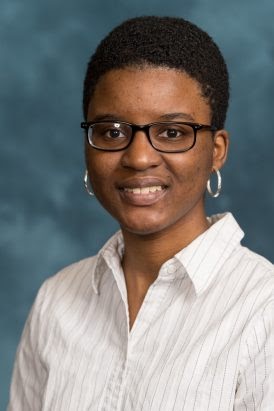
Amy graduated with a Ph.D. in Communication and Media at the University of Michigan. She is a Gaming and New Technologies Researcher at the Anti-Defamation League (ADL). Her research examines Japanese to English-speaking video game localization as a liminal process. Localization is a process that a cultural product undergoes when moving from one locale to another. While sometimes used interchangeably with the term translation, localization requires far more than transferring text from one language to another. Localization also addresses cultural differences, such as the positioning of games and game genres within the broader context of a target market’s media environment.
Casidy Campbell
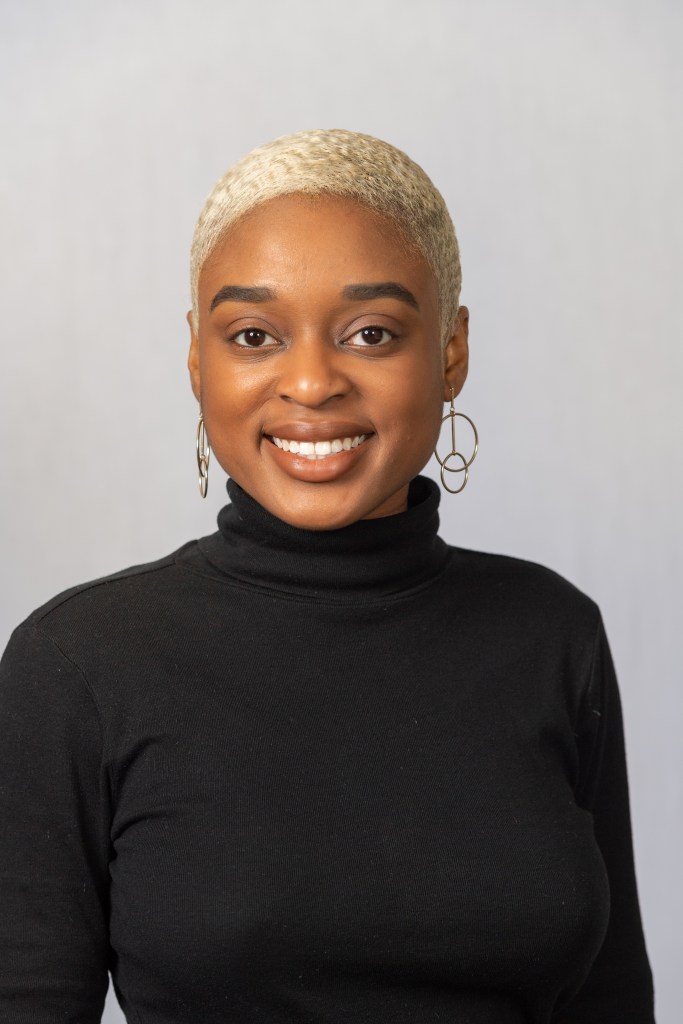
Casidy Campbell is a Postdoctoral fellow in Black Studies at Northwestern University. Her research is focused on the fullness of black girls’ personhood. It seeks to understand how black girls use the same digital technologies that often efface them to assert their quotidian perspectives. She is a 2021 Community of Scholars Fellow at the Institute of Research on Women and Gender a DISCO (Digital Inquiry, Speculation, Collaboration, and Optimism) Network Graduate Scholar. She formerly chaired the African American Caucus and co-founded the Black Research Roundtable. Campbell was a Mellon Mays Undergraduate Fellow at Emory University, where she completed her B.A. in African-American Studies and Sociology.
Joseph DeLeon
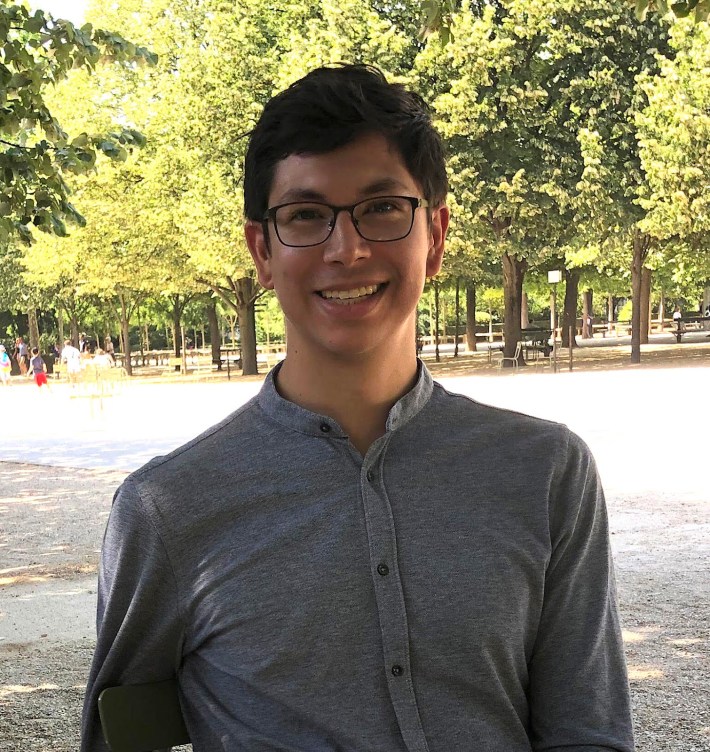
Joseph is an Assistant Professor of Integrative and Digital Studies at Grand Valley State University. His dissertation focused on discussing the history of social media before the web, spanning from public computing terminals in the early-1970s to queer zine networks in the late-1980s. His research interests include queer media studies, digital media studies, and science and technology studies. He holds an M.A. in Media, Culture, and Communication from New York University and a B.A. in French and Comparative Cultures and Politics from Michigan State University.
Hanah Stiverson

Hanah is an Extremism Researcher with Human Rights First. Her research focuses on the mainstreaming of white nationalism, male supremacism, and militancy in the U.S. Hanah’s work traces the networks that support and spread extremist ideologies through media content on digital platforms. She is a co-author of Racist Zoombombing published by Routledge (2021).
Sarah Snyder

Sarah is currently a Microsoft Research Predoctoral Research Assistant. She is a graduate of the University of Michigan with a degree in American Culture and a focus in Digital Studies. Her interests lie in the segregated spaces of digital enclosures and in studying how power works through software and hardware, specifically in race and class.
Meryem Kamil

Meryem Kamil is an Assistant Film and Media Studies Professor at the University of California, Irvine. She is a Precarity Lab member and Technoprecarious co-author (Goldsmiths Press, 2020). Learn more about Meryem’s work on her website.
Cassius Adair

Cassius Adair is an independent audio producer, writer, and researcher from Virginia, currently serving as a Visiting Assistant Professor at NYU’s Department of Media, Culture, and Communication. He is also a research fellow at the Digital Research Ethics Collaboratory at the University of Toronto and an outside member of the Precarity Lab at the University of Michigan. For the 2021-2022 academic year, he will be a Fellow at the American Council of Learned Societies (ACLS) with an affiliation at the Institute for Advanced Study at the University of Minnesota. Learn more about Cassius’ work on his website.
Joo Young Lee

Joo Young Lee (American Culture, Ph.D., 2018) is a cultural theorist of race and mixed race. She is currently a Research Professor of the Research Institute of Korean Studies at Korea University in Seoul, South Korea. Her broader scholarly interest includes critical race theory, mixed-race studies, diaspora studies, the relationship between aesthetics and faith, digital culture and race, and intellectual history in the United States. She is currently writing her book, entitled Mixed Names: Representations of Mixed-Race Black Koreans. This book examines representations of mixed-race Black Koreans in literature, films, and media since the U.S. militarization of South Korea in 1945. In addition to this book project, her recent articles focus on the portrayals of interracial relationships, Black-Korean conflict and solidarity, mixed-race identities, and the relationship between faith and the Korean diaspora (Korean Americans and zainichi) in American literature and films within the contexts of U.S.-Korea relations.
Iván Chaar-Lopez

Iván Chaar López is an assistant professor of Digital Studies in the Department of American Studies at the University of Texas at Austin. His research and teaching examine the politics and aesthetics of digital technologies. Chaar López is especially interested in the place of Latina/o/xs as targets, users, and developers of digital lifeworlds. He is currently working on a book, under contract with Duke University Press, about the intersecting histories of electronic technology, unmanned aerial systems, and boundary-making along the U.S.-Mexico border. At UT, Chaar López is the principal investigator of the Border Tech Lab where he works closely with undergraduate and graduate students in interdisciplinary research that asks how knowledge communities and technologies push the boundaries of imagination even as they work to delineate the boundaries of the possible. The BTL is working on two projects. One is devoted to researching labor, race, technoprecarity, and disposability in the gig economy. The other centers on the history of electronics manufacturing along the US-Mexico borderlands since the 1960s to interrogate the technopolitics of special economic zones, non-essential knowledge, and disposability.
Iván’s latest article published in the Critical Ethnic Studies Journal discusses the racial techno-politics of immigrant identifications and automation in the U.S. You can read the article here. He will also give a talk during the African Technoscapes Cluster at Wits Institute for Social and Economic Research titled “Notes on Border Technopolitical Regimes.” Visit Iván website to learn more about his work.
 Digital Inequality Lab